VegMRFP: Mixed Radiance Field Primitives for Vegetation Rendering and Reconstruction

Abstract

Vegetation constitutes one of the most abundant forms of life on Earth, yet accurately representing and reconstructing vegetation using radiance fields with low storage overhead remains a significant challenge. This difficulty arises from the intricate geometry of vegetation, characterized by numerous thin twigs and delicate leaves. To tackle this problem, we introduce VegMRFP, a novel framework for vegetation rendering and surface reconstruction based on mixed radiance primitives. Our method employs 2D Gaussian primitives to model plant stems and billboard primitives to represent clusters of leaves and lobes. Combined with a storage optimization strategy, the framework enables high-quality rendering of vegetation with lower memory cost. Experimental results demonstrate that our method achieves vegetation rendering quality comparable to the state-of-the-art methods, while requiring only 61.3% and 71.2% of the memory cost of BBSplat and 2DGS, respectively.

Video Presentation

Method

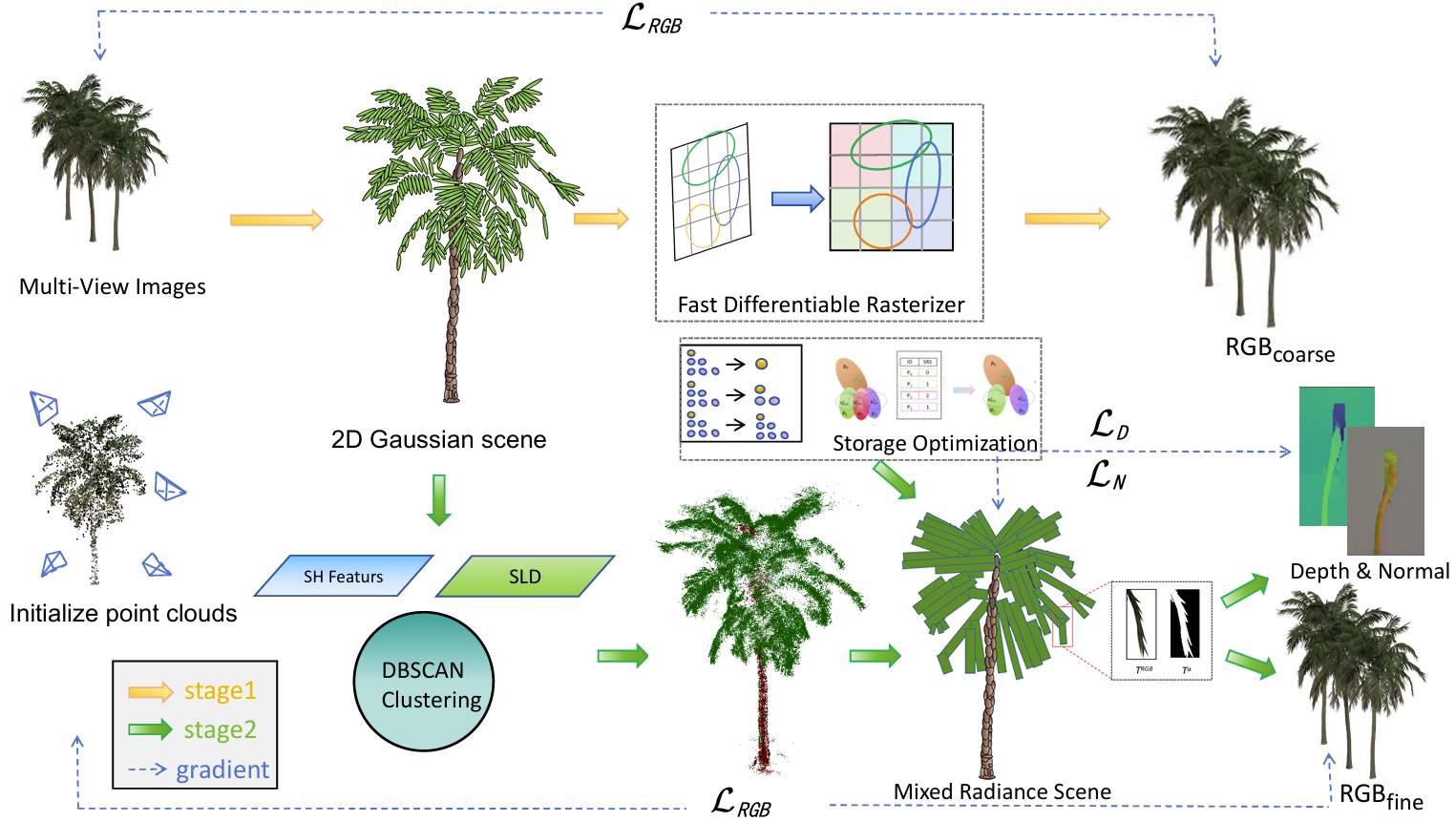
The figure shows the workflow of the VegMRFP framework. Starting from multi-view vegetation images and an initial point cloud, we first optimize 2D Gaussian primitives to establish a preliminary radiance field representation of the complete vegetation. Then, we compute SRS for each optimized 2D Gaussian, and employ DBSCAN clustering based on both SH features and SRS to segment stems from lobe clusters. The framework subsequently represents stems using refined 2D Gaussian primitives while modeling the lobe clusters with billboard primitives - jointly optimizing both depth and normal fields to maintain geometric consistency. Finally, we introduce a storage optimization method to minimize storage consumption of the vegetation model.
Mesh

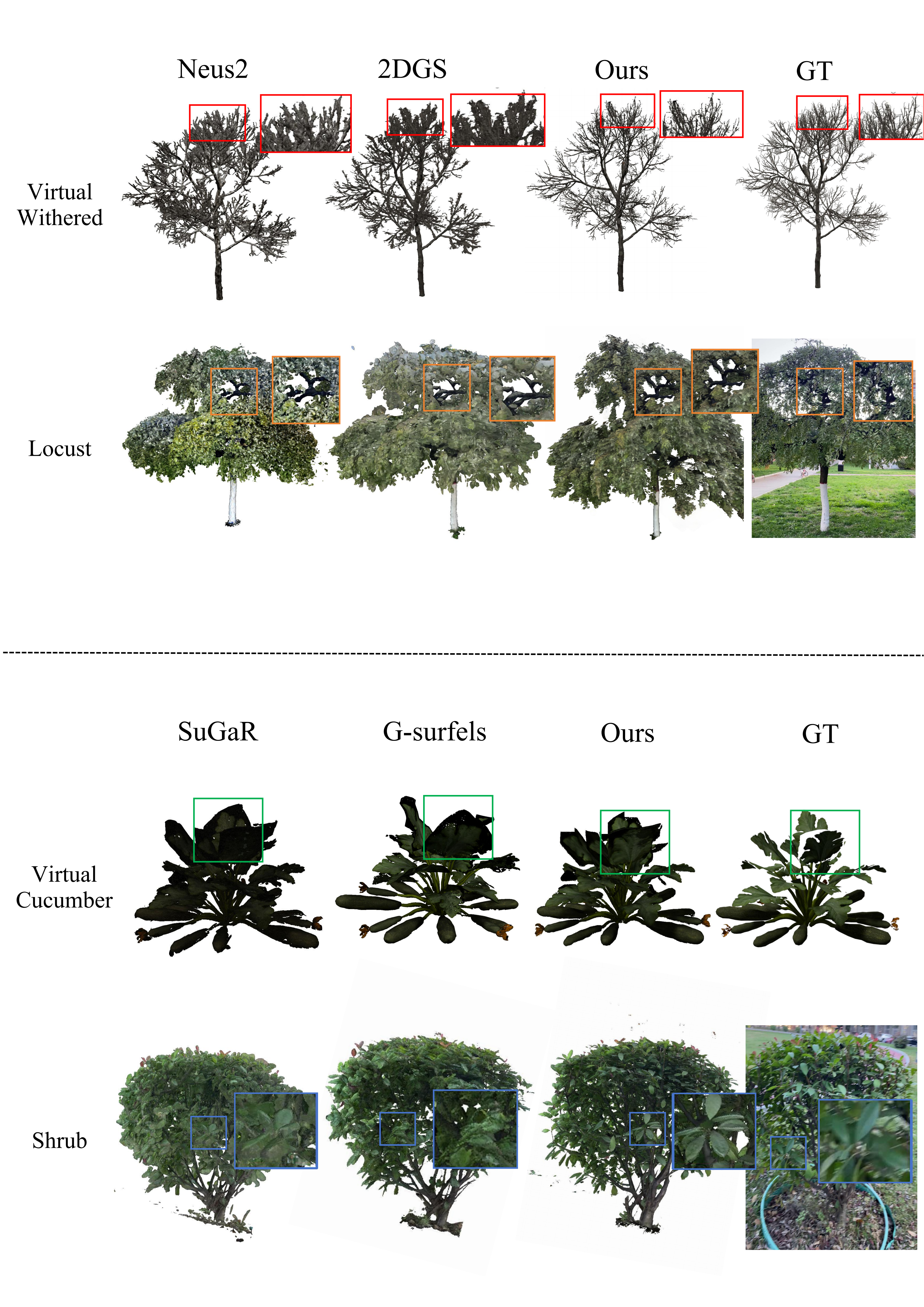
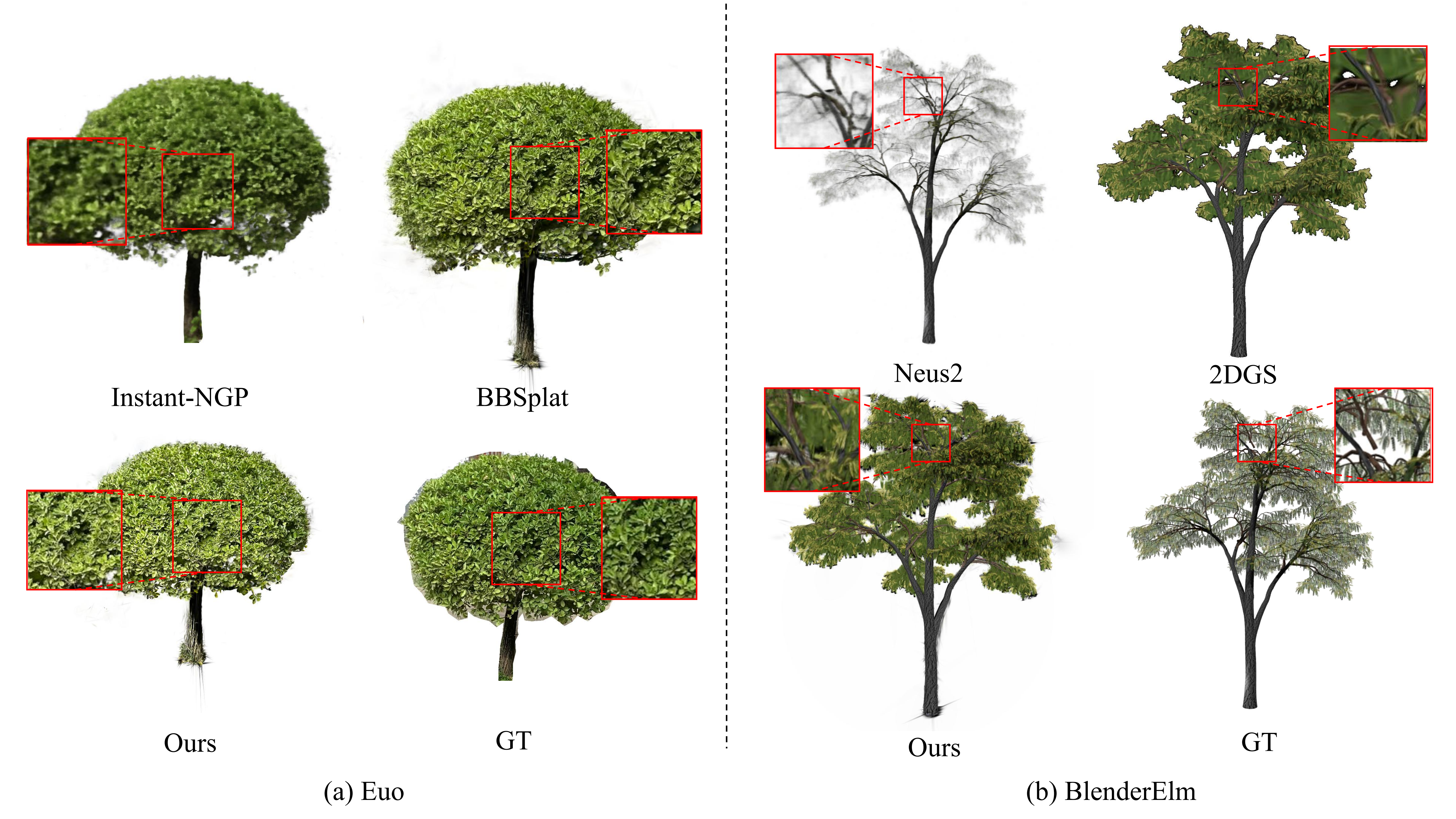
Qualitative close-up comparison of reconstructed meshes on virtual and real-world vegetation examples. The enlarged regions show that our method preserves more local geometric structures and visual details in dense foliage, thin branches, and leaf clusters.

Compared with the displayed baselines, our method better preserves local geometric and texture details in foliage regions.

Stem Details

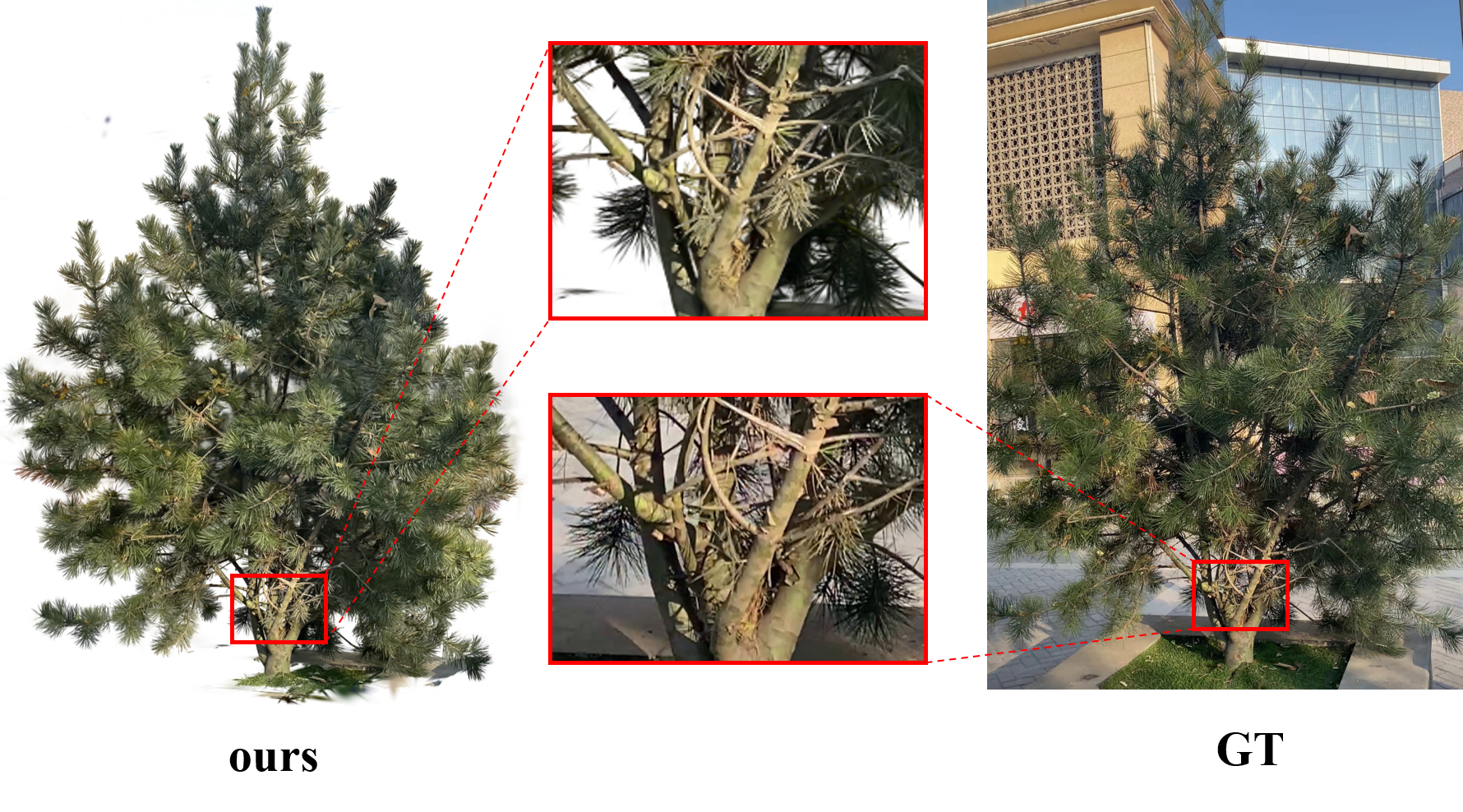
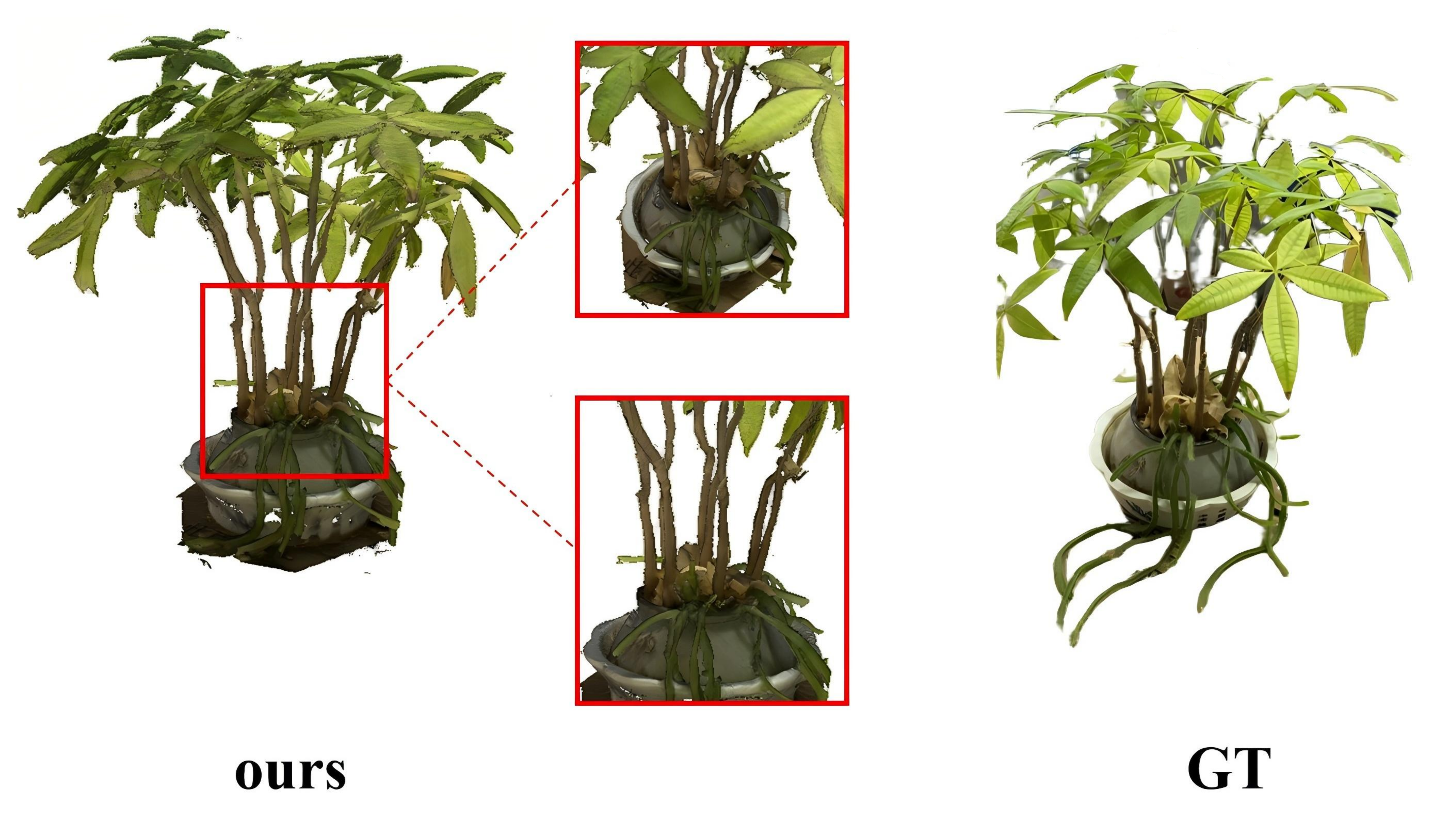
The first figure shows the Pine example, where clear branching stem structures are preserved in the rendered radiance-field representation. The second figure presents the extracted mesh of the Potted Plant example, which contains relatively curved and intertwined stems. These results demonstrate that VegMRFP can maintain coherent stem geometry and appearance for moderately complex vegetation structures.